If you want to know how to make money as a content creator in Kenya, the first thing to understand is that it is not one single job. It is a whole landscape of platforms, each with its own audience, style, and way of paying you. Some creators post short videos on TikTok. Others write blog posts that rank on Google for years. Some record podcasts, and others build a following on Instagram or YouTube. What they all share is a simple pattern: build an audience, then turn that trust into income through more than one payment method. This guide walks through the full landscape, step by step, in simple language.

What You'll Learn
1. The Full Creator Landscape in Kenya
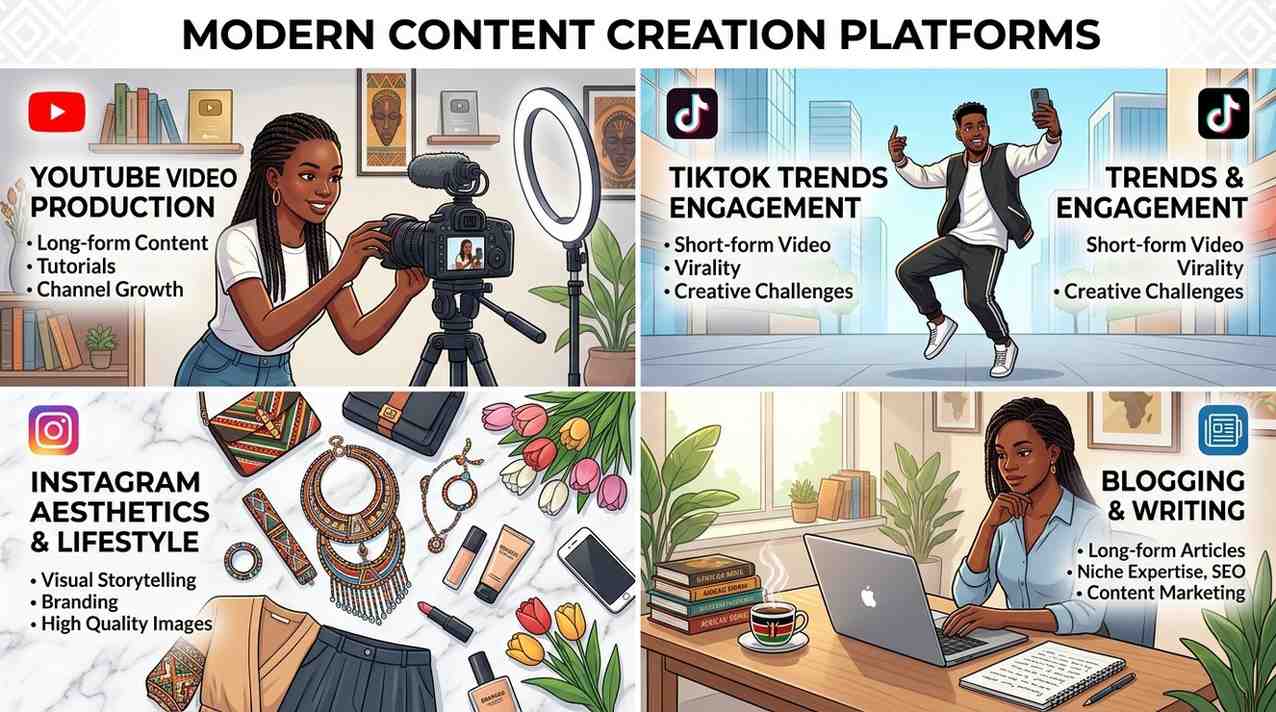
Every platform rewards a different style of content and a different kind of patience. Here is how each one works for Kenyan creators.
YouTube
YouTube is built for long-form video, tutorials, vlogs, and deep-dive content. It pays through the YouTube Partner Program once a channel passes its subscriber and watch-time thresholds. Of all the platforms, YouTube tends to give the most stable long-term ad income once a channel is established.
TikTok
TikTok rewards short, fast, entertaining videos and can grow an audience quicker than any other platform in Kenya. Its own creator payout programs are smaller, so most Kenyan TikTokers earn their real income from brand deals once they build an audience.
Instagram works especially well for fashion, food, fitness, beauty, and lifestyle creators. Reels and Stories drive most of the reach, and brand partnerships are usually the biggest income source here.
Blogging
A blog gives you full ownership of your audience and content, unlike social platforms where a sudden algorithm change can hurt your reach overnight. Blogging pairs naturally with AdSense and affiliate marketing, and content can keep earning for years after publishing. See our guide on how to start a blog to begin.
Podcasting
Podcasting is still a growing space in Kenya, with far less competition than video platforms. It usually takes longer to monetize, mainly through sponsorships, but a loyal listener base is highly valuable to advertisers once you build one.
2. How Kenyan Creators Actually Get Paid
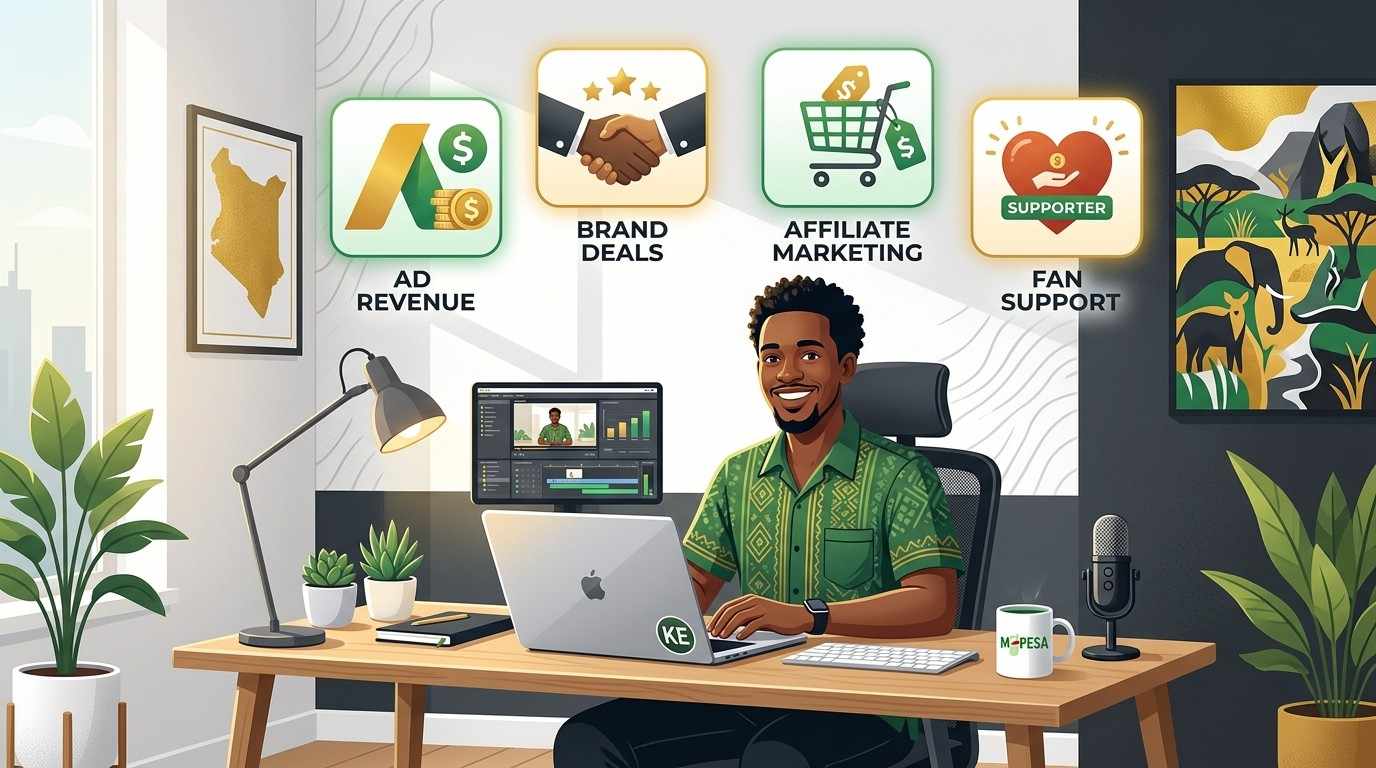
Knowing the platforms is only half the picture. The real question is how the money actually reaches your pocket. There are four main payment channels.
Platform Ad Revenue (AdSense and Similar Programs)
YouTube's Partner Program and blog display ads through Google AdSense pay you based on views and clicks on ads shown alongside your content. This is often the most passive income stream, but it usually needs real traffic before it pays meaningfully.
Brand Deals and Sponsorships
Companies pay creators directly to feature their product or service in a video, post, or blog article. This is often the single biggest income source for Kenyan creators, even those with modest but engaged audiences.
Affiliate Marketing
You earn a commission every time someone buys a product through your unique link, whether that is electronics, beauty products, hosting, or online courses. It works well for bloggers and video creators who make comparison or review content.
Fan Support
Tips, channel memberships, and "buy me a coffee"-style support let your most loyal followers pay you directly. It rarely replaces a full income on its own, but it adds a steady extra stream once an audience trusts you.
3. Growth Tactics That Actually Work
- Pick one clear niche. Creators who focus on one topic, like personal finance, comedy, or beauty, grow faster than those who post about everything.
- Post consistently. A steady schedule, even just two or three times a week, builds algorithm trust faster than occasional bursts of content.
- Study what already works. Watch the top creators in your niche and notice their hooks, pacing, and topics, then bring your own voice to similar ideas.
- Engage with your audience. Reply to comments and messages. An engaged small audience is often more valuable to brands than a silent large one.
- Repurpose your content. Turn one YouTube video into TikTok clips, Instagram Reels, and a blog post to multiply your reach from a single idea.
If you want to speed up scripting, editing, or content ideas using free tools, our guide on making money using AI in Kenya covers several creator-friendly options.
⚠️ 4. Red Flags: Scams That Target Creators
As your following grows, you will attract more scam attempts. Watch for these warning signs:
- "Pay to be featured" schemes that ask you to pay upfront for exposure, playlists, or shoutouts. Real brand deals pay you, not the other way around.
- Fake brand deal messages from unverified accounts, asking you to buy a product first and get "reimbursed" later.
- Follower and view-buying services that promise fast growth. These can get your account suspended and destroy trust with real brands.
- Unclear or missing contracts for paid partnerships. Always get payment terms in writing before posting sponsored content.
- Requests for banking PINs or passwords disguised as "payment verification."
If an offer feels rushed, unclear, or asks you to pay first, treat it as a red flag until proven otherwise.
5. Full Pay Range Table (2026)
| Creator Level | Audience Size (approx.) | Monthly Income Range (Ksh) |
|---|---|---|
| Beginner | Under 5,000 followers | 5,000 – 20,000 |
| Growing | 5,000 – 50,000 followers | 20,000 – 60,000 |
| Established | 50,000 – 200,000 followers | 60,000 – 150,000 |
| Top-Tier | 200,000+ followers | 150,000 – 300,000+ |
| Blogger (AdSense + Affiliate) | 10,000+ monthly readers | 15,000 – 100,000+ |
Income ranges are general estimates based on current market data and reader reports. Actual earnings depend on niche, engagement rate, and how many payment methods a creator combines.
6. What You Need to Get Started
- A smartphone with a decent camera
- Stable internet for uploading and researching content
- Basic lighting, such as a ring light or natural window light
- A simple editing app or software
- A Google account for AdSense and a PayPal or M-Pesa setup for receiving payments
If writing is more your strength than being on camera, our posts on freelance writing jobs in Kenya and graphic design freelance jobs can help you build creator-adjacent skills while you grow your own audience.
Need Help Planning Your Content Strategy?
Reach out to the Online Errands team for guidance on niches, platforms, and monetization.
Call / WhatsApp: 0714 701 8147. Frequently Asked Questions
How do you make money as a content creator in Kenya?
You make money as a content creator in Kenya by choosing a platform such as YouTube, TikTok, Instagram, a blog, or a podcast, building a loyal audience, and earning through AdSense-style ad revenue, brand deals, affiliate links, or fan support.
Which platform is best for content creators in Kenya?
There is no single best platform. YouTube suits long-form video and steady ad revenue, TikTok grows audiences fastest, Instagram fits visual niches, blogging gives full ownership and pairs with AdSense and affiliates, and podcasting has less competition.
How do Kenyan content creators actually get paid?
Through four main channels: platform ad programs like YouTube Partner Program and AdSense, brand deals and sponsorships, affiliate marketing commissions, and direct fan support such as tips or memberships.
How much do content creators in Kenya earn?
Beginner creators may earn Ksh 5,000 to Ksh 20,000 a month. Mid-size creators with an engaged following can earn Ksh 30,000 to Ksh 150,000. Top Kenyan creators can earn well over Ksh 300,000 a month.
Do I need a lot of followers to make money as a content creator in Kenya?
Not always. Brand deals, affiliate marketing, and fan support can start earning with a small, highly engaged audience, sometimes under 5,000 followers.